
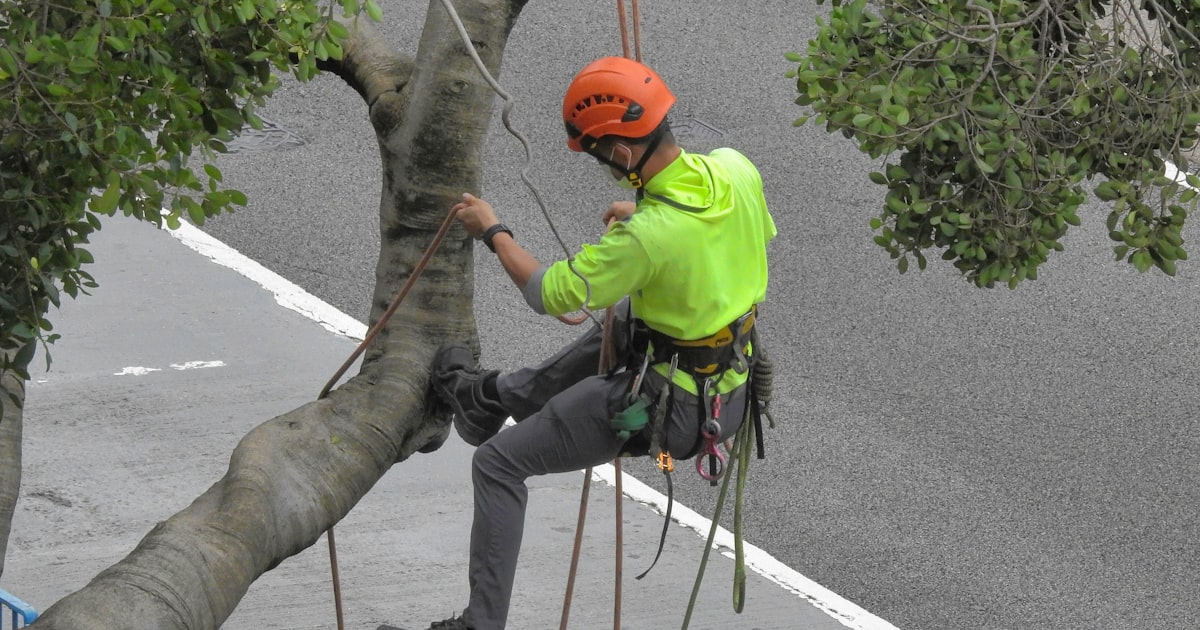
Houston's majestic oak trees, towering pines, and sprawling pecans add tremendous value to our properties and neighborhoods. But our Gulf Coast climate—with its heavy storms, high winds, and waterlogged soil—can threaten even the healthiest trees. When a valuable tree develops structural weaknesses, tree cabling and bracing systems offer a proven solution to extend its life and protect your property. This preservation technique has saved countless mature trees across Houston, from the Heights to Memorial and Sugar Land.
Understanding Tree Cabling and Bracing Systems
Tree cabling and bracing are structural support systems designed to reduce stress on weak branches or multiple trunks. These techniques work together to reinforce a tree's natural structure without harming its health or growth.
Cabling involves installing flexible steel cables between major limbs or co-dominant stems in the tree's upper crown. These cables limit the movement of supported branches during high winds and storms, redistributing structural stress to stronger parts of the tree. The cables are positioned about two-thirds up the tree's height and installed through specialized hardware that doesn't damage the bark or cambium layer.
Bracing uses threaded steel rods to bolt through weak branch unions or crotches where splits have already occurred. Unlike cables that prevent excessive movement, bracing physically holds sections together that might otherwise separate. This technique is particularly valuable for repairing storm damage or preventing further splitting in trees with multiple trunks.
Both methods work best when installed by certified arborists who understand tree biology and structural mechanics. The goal is always preservation—keeping mature trees standing safely while allowing them to continue their natural growth patterns.
When Houston Trees Need Structural Support
Houston's unique environmental conditions create specific scenarios where cabling and bracing become necessary. Our clay-heavy soil expands dramatically when saturated, then contracts during dry periods, which can shift root systems and create instability in the trunk and crown.
Trees with co-dominant stems—where two or more trunks of similar size grow from a single point—are especially vulnerable. Live oaks, a Houston favorite, frequently develop this growth pattern. Without the natural interlocking wood grain of a single trunk, these unions are prone to splitting during our notorious thunderstorms and tropical weather events.
Large, horizontal limbs that extend over homes, driveways, or gathering spaces also benefit from cabling. Mature pecan trees and southern magnolias often develop these magnificent spreading branches that can span 30 feet or more. While beautiful, their sheer weight makes them susceptible to failure, particularly when loaded with ice during our occasional winter storms.
Storm damage is another common trigger. After hurricanes, tropical storms, or severe thunderstorms roll through neighborhoods like Bellaire, West University, or Kingwood, trees may develop partial splits or cracks. Bracing can stabilize these injuries while the tree compartmentalizes the wound and continues growing.
Consider structural support if you notice:
- V-shaped branch unions rather than U-shaped attachments
- Visible cracks or splits in branch crotches
- Excessive leaning or imbalanced canopy weight
- Historical or specimen trees you want to preserve
- Large limbs overhanging structures or high-use areas
The Tree Preservation Benefits
Choosing cabling and bracing over removal offers substantial advantages for Houston property owners. Mature trees provide irreplaceable benefits that take decades to redevelop.
A large shade tree can reduce your cooling costs by 20-30% during Houston's brutal summers by shading your roof and blocking afternoon sun. That single tree works as hard as multiple air conditioning units, without the electricity costs. Removing it means losing both shade and money.
Property values increase significantly with mature trees. Real estate studies consistently show that homes in tree-lined Houston neighborhoods command premium prices. A well-maintained 50-year-old live oak contributes thousands of dollars to your property's market value—far more than the cost of proper structural support.
Environmental benefits multiply with tree age. Mature trees absorb more carbon dioxide, filter more air pollutants, and manage more stormwater runoff than young replacements. During Houston's flash flood events, established tree root systems help stabilize soil and slow water movement, reducing flooding impacts on your property and throughout the watershed.
Historic and specimen trees carry irreplaceable cultural value. Many Houston neighborhoods feature heritage trees that witnessed the area's development, provided shade for generations, or define the community's character. Preservation maintains that living connection to our shared past.
The Professional Installation Process
Quality cabling and bracing requires expertise, proper materials, and understanding of tree physiology. The process begins with a thorough assessment by a certified arborist who evaluates the tree's overall health, structural integrity, and specific risk factors.
The arborist identifies optimal attachment points based on branch diameter, growth patterns, and load distribution. For cabling, attachment points typically require branches at least 4 inches in diameter. The cables are installed with enough slack to allow natural movement while preventing excessive swaying that could cause failure.
Professional-grade materials matter significantly. Steel cables and hardware must meet industry standards for strength and durability. The hardware is designed to allow the tree to grow around it gradually without causing long-term damage. Amateur installations using improper materials or techniques can actually harm trees and create greater hazards.
Timing considerations are important in Houston. Installation during mild weather—typically fall through early spring—allows trees to adapt before our severe storm season arrives. The tree should also be properly pruned to remove deadwood and reduce overall weight before support systems are installed.
After installation, regular inspections ensure the system continues functioning properly. Cables and hardware should be checked annually for wear, proper tension, and tree growth that might require adjustments. Trees don't stop growing after support installation, so the system must accommodate ongoing development.
Choosing the Right Solution for Your Houston Property
Not every tree requires cabling or bracing, and not every tree is a good candidate. An honest assessment from a qualified arborist helps you make the best decision for your specific situation.
Trees in severe decline or with extensive decay may not benefit from structural support. If more than 50% of the tree shows disease, pest damage, or root problems, the investment in cabling may not be worthwhile. Similarly, trees in inappropriate locations—too close to foundations, under power lines, or blocking necessary construction—might need removal regardless of their condition.
Cost considerations should balance installation expenses against the tree's value and removal costs. While cabling and bracing require upfront investment and ongoing inspection, removing a large tree and grinding the stump often costs as much or more. Factor in the replacement value—a mature tree's equivalent would take 20-50 years to grow—and preservation becomes economically sensible.
Local regulations in Houston and surrounding municipalities may affect your options. Some areas have tree preservation ordinances protecting significant specimens. Heritage trees or protected species might require permits for removal but could be saved through proper structural support.
Protect Your Houston Trees with Expert Care
Houston's trees face unique challenges from our climate, soil conditions, and storm patterns. When you have a valuable tree showing structural weakness, professional cabling and bracing can extend its life for decades while protecting your property and preserving the benefits only mature trees provide.
At HamodaTrees, our certified arborists have extensive experience evaluating and supporting Houston-area trees. We understand the specific stresses our Gulf Coast environment places on different species and can recommend the most effective preservation strategies for your landscape. Don't wait until the next storm to address structural concerns—proactive support is far more effective than emergency response.
Contact HamodaTrees today for a professional tree assessment. We'll help you determine whether cabling, bracing, or other solutions can save your valuable trees and keep your property safe and beautiful for years to come.
Related service
Professional tree trimming in Houston & surrounding areas